Advice
Scared of Scarifying? Let’s Take the Fear out of Lawn Care
Adam Woolcott Takes a First Look at the Webb Eco X-Series 40V Cordless Scarifier & Rake
By Adam Woolcott
Scarifying. Even the word sounds a little frightening, doesn’t it? And the thought of pulling material out of your lawn when you’re trying to make it look better can seem rather backwards.
But where moss and thatch have built up, scarifying is one of the most useful jobs you can do to help your lawn.
Scarifying removes excess thatch and moss, helping water reach the soil and creating space for fresh growth. Spring and early autumn are useful opportunities, provided the grass is actively growing and conditions allow it to recover afterwards.
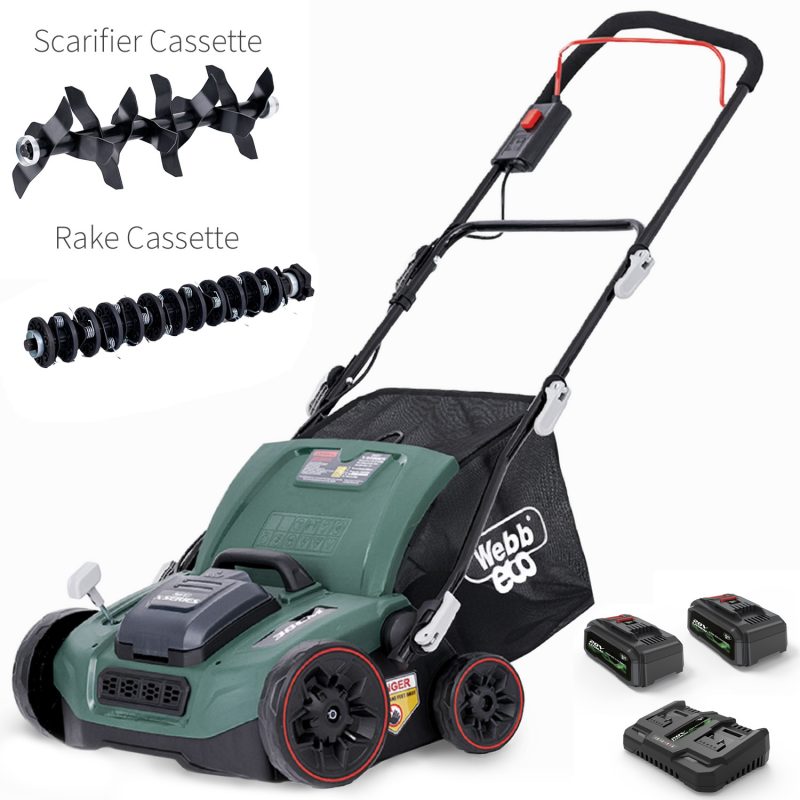
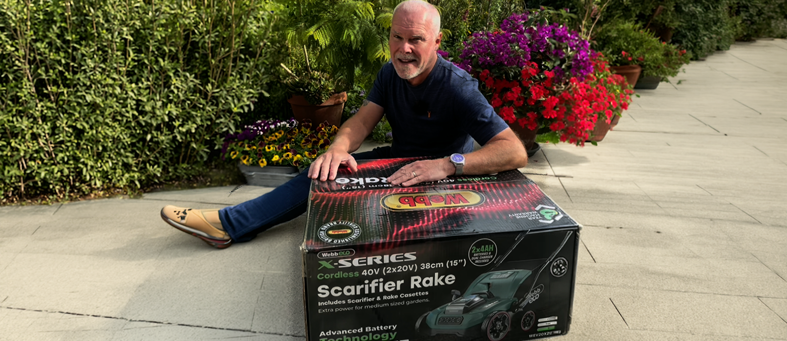
I’ve been asked to take a look at the Webb Eco X-Series WEV20X2SRB4X 40V 38cm Cordless Scarifier Rake, supplied with two 20V 4Ah batteries and a charger. If this is a job you’ve been putting off, its cordless convenience and interchangeable cassettes make it well worth a closer look.
What is Scarifying?
Think of scarifying as a clear-out around the base of your grass.
Over time, dead stems, roots and other organic material can build up between the green grass and the soil. This layer is called thatch.
A little is normal, but too much can become a dense, spongy barrier. Scarifying uses blades to work through this layer and lift out unwanted material. A lawn-raking cassette uses wire tines for lighter removal of moss and surface debris.
It’s a different job from mowing: your mower cuts the grass above the surface, while a scarifier tackles the build-up underneath.
Why does your Lawn Need Scarifying?
If you’re looking after the top of your lawn but ignoring what’s happening beneath it, you could be missing part of the picture.
Excess thatch can make it harder for water to reach the soil and reduce airflow around the grass. Removing it helps create better growing conditions and prepares thin areas for overseeding.
After a dry summer, however, don’t assume every brown lawn needs scarifying. Let the grass recover and start growing again, then inspect its base.
If there’s a thick, matted layer of thatch or a build-up of moss, that’s when scarifying or raking can help.
When should you Scarify?
Choose your conditions carefully. I’d look for actively growing grass, moisture in the soil and enough mild weather ahead for recovery.
Avoid working on a lawn that is drought-stressed, waterlogged or frozen. If autumn is turning cold and growth has slowed, leave the job until suitable spring conditions return.
Scarifying isn’t something to rush simply because the calendar says autumn. Your lawn needs to be ready for it.
Meet the Webb Eco X-Series Cordless Scarifier & Rake
One reason people put off scarifying is the thought of getting a cumbersome machine out or trailing an extension lead around the garden.
This Webb runs on two 20V batteries working together to provide 40V power, so there’s no mains cable to manage and no petrol engine to maintain.
Its 38cm working width makes it a practical option for small to medium lawns, while the two interchangeable cassettes let you choose between scarifying and lighter lawn raking.
For me, that flexibility is a big part of its appeal. You can choose the attachment to suit what your lawn actually needs.
Which Features Stand Out?
40V Brushless Power without the Cable
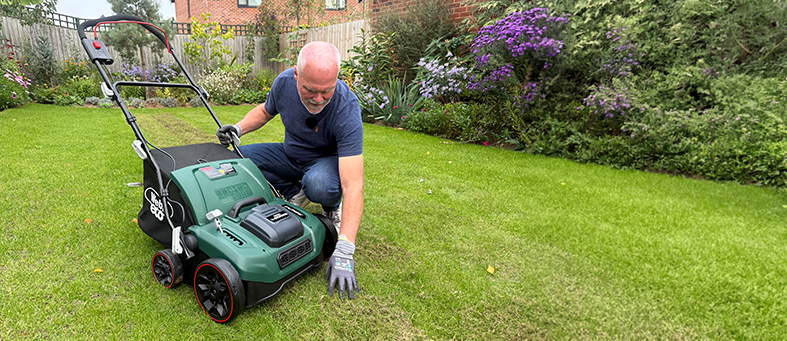
The brushless motor is powered by both batteries simultaneously, giving you cordless freedom to move around the lawn.
That’s particularly useful when working around beds, borders and irregular garden shapes. You can concentrate on guiding the machine rather than keeping track of an extension lead.
Two Cassettes for Different Lawn Care Jobs
The machine comes with two interchangeable attachments:
- A 10-blade scarifying cassette for tackling more embedded thatch.
- A 24-tine lawn-raking cassette for lifting moss and loose surface debris.
The tool-free cassette change makes switching between the two straightforward. Always switch off, remove the batteries and follow the instructions before changing attachments.
A 38cm Working Width
The working width gives useful coverage while remaining manageable around a domestic lawn.
It’s a practical balance for gardeners who want to move beyond hand-raking without bringing a much larger machine into the garden.
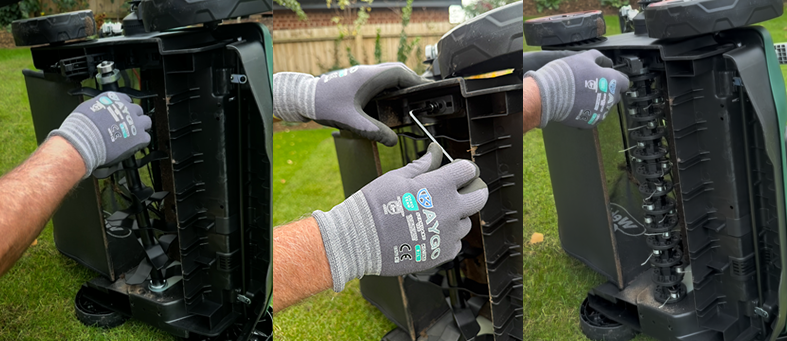
Central Working Height Adjustment
A central lever lets you adjust the working height to suit the task.
My advice is to start gently and test a small area. The deepest setting isn’t automatically the best: you want to remove unwanted build-up without unnecessarily disturbing healthy grass.
Check the recommended setting for the cassette you’re using and adjust only as needed.
A Collection Bag to Gather the Debris
The 45-litre collection bag gathers loosened material as you work, helping keep the lawn clear.
You may be surprised by how much comes out of a mossy lawn, so expect to empty it regularly. Clear away any material left behind before moving on to reseeding or other aftercare.
Batteries for Compatible Webb Eco Tools
If you already own compatible Webb Eco cordless tools, sharing batteries is another useful benefit.
It means you can build your collection with compatible tool-only machines rather than buying another battery and charger every time. Always check the requirements, as some tools need one battery and others use two.
What are the Key Specifications?
| Feature | Specification |
|---|---|
| Model | WEV20X2SRB4X |
| Power system | 40V, using two 20V batteries simultaneously |
| Batteries included | 2 × 20V 4Ah lithium-ion batteries |
| Motor | Brushless |
| Working width | 38cm (15″) |
| Working height adjustment | Central lever |
| Scarifying cassette | 10 blades |
| Lawn-raking cassette | 24 tines |
| Cassette change | Tool-free |
| Collection bag | 45 litres |
| Stated runtime | Up to 42 minutes, depending on conditions |
| Charger | Included |
The runtime is a stated specification, rather than a timed result from this out-of-the-box review. Actual working time depends on conditions and how hard the machine is working.
My Tips for Getting Started
1. Check what your Lawn Needs
Part the grass and look at its base. Identify whether you’re dealing with embedded thatch, moss or loose debris before choosing your cassette.
2. Prepare the Area
Remove stones, sticks and other obstacles. Mow beforehand if needed, without scalping the grass, and choose a day when the surface grass is dry.
3. Start with a Gentle Pass
Follow the operating instructions and test your setting before tackling the whole lawn. Check the result rather than repeatedly working the same area.
4. Clear up and Assess
Collect the loosened material and see where the lawn needs further attention. Thin or bare areas may benefit from reseeding when temperatures and moisture are suitable.
Should you Worry if the Lawn Looks Worse Afterwards?
This is the part that can put people off!
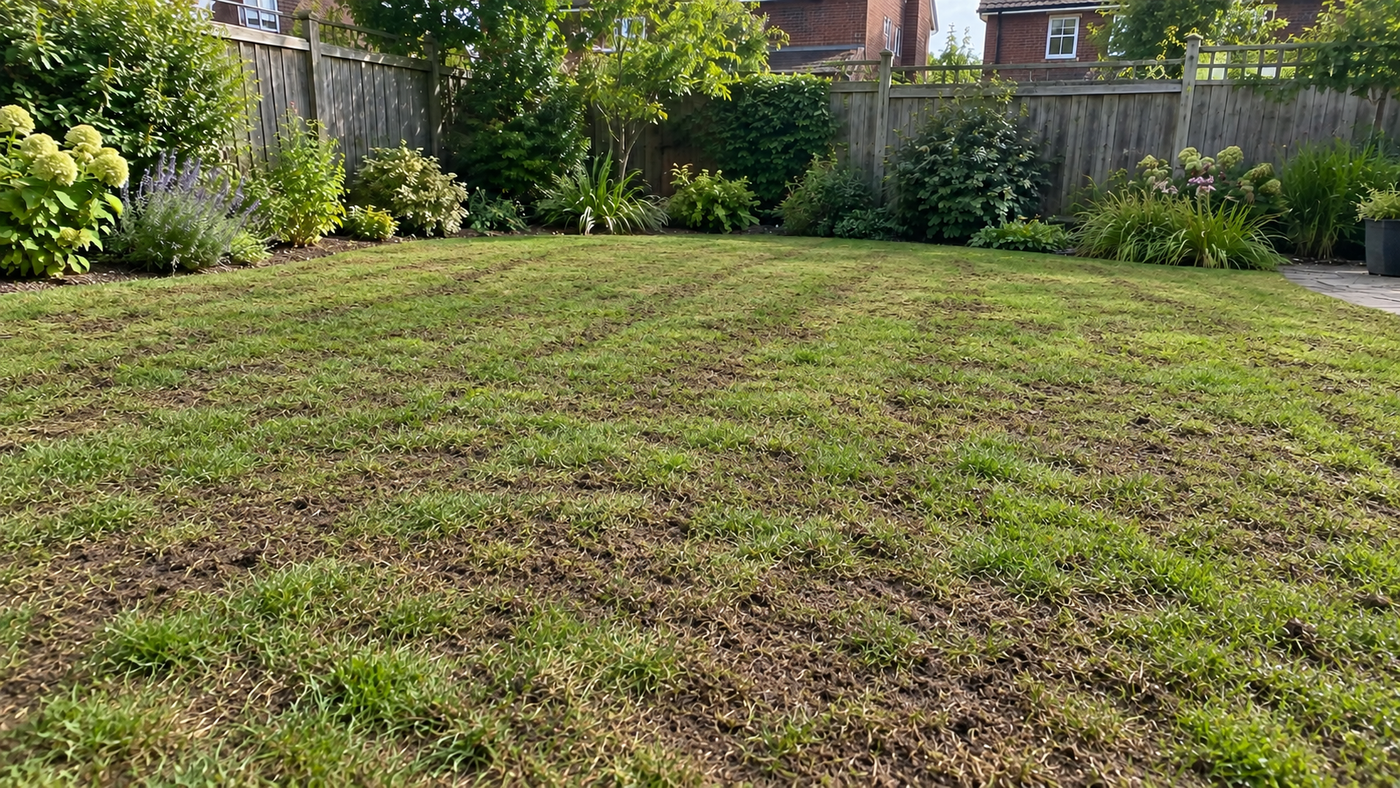
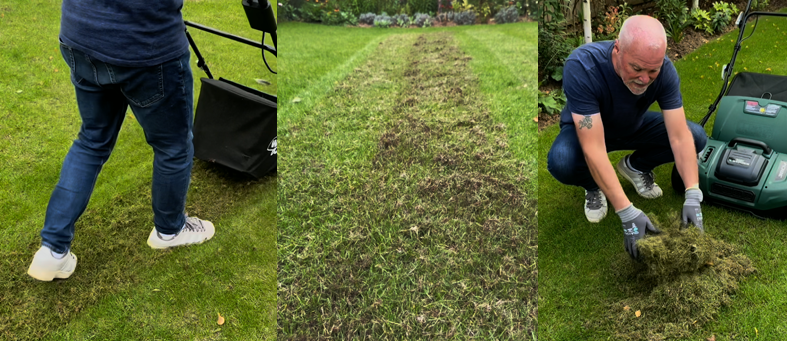
Removing moss and thatch can leave the lawn looking thinner or rougher initially. You’re revealing what was underneath the build-up, so it won’t necessarily look picture-perfect straight away.
Give it suitable growing conditions and appropriate aftercare. Scarifying is part of improving the lawn over time, rather than an instant cosmetic fix.
My First Impressions
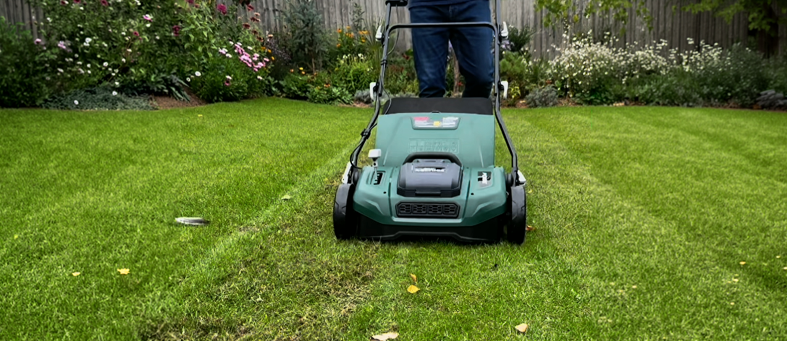
The Webb Eco X-Series 38cm Cordless Scarifier & Rake looks like a useful addition to the domestic lawn-care toolkit.
What appeals to me is the combination of cordless convenience, two interchangeable cassettes and adjustable working height. It makes a potentially daunting task feel much more approachable.
If you’ve never scarified before, this is certainly worth considering. Get the timing right, start gently and give your lawn the chance to benefit.
Frequently Asked Questions
Is Scarifying the Same as Lawn Raking?
They overlap, but the attachments do different jobs. The bladed cassette tackles embedded thatch, while the wire-tine cassette lifts moss and loose surface material.
Does it Need Both Batteries?
Yes. The machine uses two 20V batteries together to provide 40V power. This kit includes two 4Ah batteries and a charger.
Should Every Lawn be Scarified?
No. Scarify according to the condition of the lawn. If there’s little thatch and the grass is healthy, it may not need treatment.
Can I Scarify after a Dry Summer?
Wait until moisture has returned and the grass is growing again. Only proceed if there’s excess thatch or moss to remove and enough suitable growing weather for recovery.
Does Scarifying Replace Aeration?
No. Scarifying removes thatch, while aeration creates holes in the soil to help address compaction and improve air and water movement around the roots.
Ready to Take the Fear out of Scarifying?
Join me for a closer look at the Webb Eco X-Series and the features that could make your next lawn-care session easier.
Happy gardening!
Adam Woolcott
Explore the Webb Eco X-Series Cordless Scarifier & Rake →